Saturday, August 7, 2010

I Probably Need To Get Out More Often


In a recent e-mail, my brother Bill writes, “I've been told before that I'm easily impressed.” I can relate, which weighs heavily on the nature over nurture argument, since he was only 11 or 12 when I left home. One of my favorite activities as a young, and only, child was to watch the tar bubble in the streets on one of those unbelievably hot Iowa summer afternoons. I’d poke the little bubbles with a stick until they’d pop and run (precursor to adolescence, no doubt). This could entertain me for an insane amount of time.

My brother continues, “Comments like ‘You need to get out more often’ have been hurled at me in the past. But today I was impressed. Brooke and I were watching an ant carry a dead beetle. This beetle had to be 10- times bigger than the ant. We watched it go at least 15-feet. He (the ant) would stop every once in awhile to (we surmised) catch his breath.”

I also remember from childhood, the beautiful rainbow puddles left on the concrete driveway after a rain. I knew they were magic, gifts from the rain gods left for me to play with, to swirl my finger through and enjoy the ripple of colors. My parents said they were from an oil leak under the car. What did they know; they were just adults.

To be able to see the world as an adult through child eyes is a rich gift. For me, it’s the genesis of art and creativity. Dare to be young.

p.s. the photo above is from my vacation in Belize. It's a gnarled tree root that had been chopped off. When I passed it, my child eyes saw it and gasped, "ah, look--a monkey!" Do you see it?

Saturday, July 31, 2010

The Other Shoe


Where do they come from, these shoes abandoned along the side of the road, in a muddy field, in the middle of a busy intersection, floating in the rushes along the bank of the creek? They’re everywhere. Where’s the other one? Does it go home to live a short life as half a couple thrown in the back of a dark closet until it meets its fate in the garbage bin? What does one do with one shoe? Hop?

I get disconcerted about things that others seem to take in stride. Like mucus. This last allergy season was horrific. Every year I pledge to invest a huge amount in Kleenex stock. I remember that unfulfilled pledge each summer as I’m purchasing my umpteenth-zillionth box of tissue to accommodate an unending supply of mucus. I mean really, where does it all come from? No one should be that prolific.

And mosquitoes! Don’t even get me started. What a total waste of creative energy. I see absolutely no purpose for mosquitoes. I could be wrong now, but I don’t think so.

There are a plethora of smaller nuisances that barely deserve mentioning—colors that clash badly, poor grammar (I am my mother’s daughter after all), scented hairspray, bad breath, shoes with no arch support… You perhaps have your own list.

Am I overlooking the really, really big stuff, like war, poverty, famine, disease, injustice, cruelty? Not at all. Those are abundantly addressed in our society. This is a mere respite, a light-hearted blog, a breath of fresh air to rejuvenate us so we can go back out there and fight the good fight, love bigger and better, shine brighter and stronger. Live on!

Saturday, July 24, 2010

More Bits and Pieces


Update: Occasionally I get feedback on my posts—I love it! Regarding my July 10 posting on Spirit Guides, my friend Nancy down near Los Gatos writes, “I loved reading this! Did you know that scientists have found that when cats & dogs look at you intently like that and then consciously blink, they are acknowledging a connection to you? It's like the animal kingdom's way of saying "Namaste."

This morning’s bits and pieces, those moments I try to capture before they’re gone in a flash (see July 3 posting), is about my bicycle. I got it from my grandparents when I was seven, and through many seasons of cousins learning to ride on it, several paint jobs (thanks brother Bill), and years of retirement in my folks potting shed in Colorado, we were reunited a few years ago. We are inseparable now, as we were in my childhood.


I pedal my antique Schwinn through midday autumn. The scent of burnt wood from fireplaces wraps its invisible tendrils of smoke around currents of air. Against a backdrop of cloudless blue hang orange, gold, green and crimson leaves that glitter hypnotically as the sun teases the shadow branches. An updraft of breeze at my back hurls a tornado of colorful leaves that spin crazily about my head, around my body, through the spokes of my bicycle wheels. Clickety, clickety, clickety—like the playing cards fastened with clothespins from a childhood over five decades ago. I laugh aloud. A crow cocks its head from a telephone wire at this old lady on her bicycle. Caw, it chortles.

Saturday, July 17, 2010

Three Little Words That Work!!


I’ve always considered myself a relatively polite person. I hold telemarketers with compassion, knowing they’re just doing their job—and that you couldn’t pay me enough to do that particular job. In the past I’ve terminated the conversation early, after they’ve obliterated the pronunciation of my name, by saying, “Is this a telemarketing call?” That seems to stun them into silence or babbled excuses. Then I merely tell them I don’t accept telemarketing calls, thank them for understanding that, and I hang up.

There are days, like when the car won’t start, or my hair looks like I’ve slept upside down, or I can’t find my keys, or—any number of things—when I’m feeling less charitable. I don’t want to be bothered just as I sit down to dinner, or walk in the door after a long day. I’m not feeling particularly compassionate at those times. Woe to the next telemarketer who calls me on a bad day now that I’ve received the following e-mail:

(1)The three little words are:*'Hold On, Please...' *

Saying this, while putting down your phone and walking off (instead of hanging-up immediately) would make each telemarketing call so much more time consuming that boiler room sales would grind to a halt.

Then when you eventually hear the phone company's 'beep-beep-beep' tone, you know it's time to go back and hang up your handset, which has efficiently completed its task.

These three little words *will help* eliminate telephone soliciting.*

(2) Do you ever get those annoying phone calls with no one on the other end? *

This is a telemarketing technique where a machine makes phone calls and records the time of day when a person answers the phone.

This technique is used to determine the best time of day for a 'real' sales person to call back and get someone at home.

What you can do after answering, if you notice there is no one there, is to immediately start hitting your * # button on the phone, 6 or 7 times as quickly as possible.* This confuses the machine that dialed the call, and it kicks your number out of their system. Gosh, what a shame not to have your name in their system any longer!!!*

(3) Junk Mail Help:*
When you get 'ads' enclosed with your phone or utility bill, return these 'ads' with your payment. Let the sending companies throw their own junk mail away.

When you get those 'pre-approved' letters in the mail for everything from credit cards to 2nd mortgages and similar type junk, do not throw away the return envelope.

Most of these come with postage-paid return envelopes, right? It costs them more than the regular 41 cents postage 'IF' and when they receive them back.

It costs them nothing if you throw them away! The postage was around 50 cents before the last increase and it is according to the weight. In that case, why not get rid of some of your other junk mail and put it in these cool little, postage-paid return envelopes. *

One of Andy Rooney's (60 minutes) ideas. *

Send an ad for your local chimney cleaner to American Express. Send a pizza coupon to Citibank. If you didn't get anything else that day, then just send them their blank application back! If you want to remain anonymous, just make sure your name isn't on anything you send them.

You can even send the envelope back empty if you want to just to keep them guessing! It still costs them 41 cents.

The banks and credit card companies are currently getting a lot of their own junk back in the mail, but folks, we need to OVERWHELM them. Let's let them know what it's like to get lots of junk mail, and best of all they're paying for it...Twice!

Let's help keep our postal service busy since they are saying that e-mail is cutting into their business profits, and that's why they need to increase postage costs again. You get the idea!

If enough people follow these tips, it will work ---- I have been doing this for years, and I get very little junk mail anymore.


Again, I’m just sharing an e-mail I received. Please, don’t shoot the messenger.

Saturday, July 10, 2010

Spirit Guides


I certainly have those. Author Hal Zina Bennett* speaks of spirit guides in the imaginal realm of invisible reality. I referred to them as my muses or ancient ancestors in my June 12th blog, Music as Creativity. I also have guides in the present, manifested in body, that are a source of safety, wisdom, inspiration, and guidance. Let me introduce you to my turtle guide.

In October, 2005, my friends Trudy, Joan, Joan’s brother Marty and I vacationed in Maui, HI. Everything about island life suited my soul, the warmth, the moisture in the air, the trade winds, the vibrant colors. We’d wake at sunrise with the sound of tropical bird, so much brighter and louder than their mainland relatives, have fresh fruit smoothies, don our swimsuits, throw flippers and snorkel paraphernalia over our shoulders and head for the beach.

Joan, Marty, and Trudy grew up near the ocean and are strong, confident swimmers. I grew up on the Mississippi River where activities such as skiing, boating, tubing were on top of the water. It was so grungy you didn’t really want to swim in it. My friends are natural athletes, good upper body strength from years of tennis. I remember playing tennis somewhere back in junior high for a few months. They are strong hikers. I stroll.

Our first morning there, Joan showed me the snorkeling ropes in the 3 foot end of the condo pool. I’m a nose breather and not big on having my air supply blocked, and the concept of spitting on my goggles to keep them fog free unsettled my stomach. And flippers—how the heck do you stand up in the water with those on your feet? She was a very patient teacher.

The first day I stayed near the beach, wandering maybe fifty feet from the water’s edge to bend over and stick my face in the ocean, hoping to see some form of sea life as my companions romped and played in the waves, shouting and signaling to each other when a coral reef or an amazing school of fish were found.

My second day, I ventured a little farther from the beach and actually tried out those flippers. Wow. There’s a whole world under the water that I’d never seen. I curbed my natural tendency to gasp with joy and amazement after inhaling a bucket load of salt water down my tube. I hadn’t yet mastered the art of clamping off the tube to dive deeper.

By day three, I was fearless. Well, tentatively fearless. We were in a cove known for dolphin visitation at a particular time of morning. They swim in to play with the tourists for half an hour or so, then swim back out to sea—it’s an amazing display of inter-species connection. Joan, Trudy, and Marty were far enough from shore that I used our bird-watching field glasses to enjoy their cavorting about with the dolphins. The dolphins would jump high into the air, spin around, and dive back under. My friends would swim in between them, laughing, throwing their arms up in glee. They waved at me, gesturing for me to join them. It sure looked like they were having fun. They sure were a long way from shore. I had about twenty minutes left to decide. I walked to the water’s edge, donned my flippers, and awkwardly waddled out to the deeper water.

The warm water felt delicious and the sun glimmered on the ocean floor beneath me. Small schools of fish slipped around my body as I swam slowly in the direction of my friends. I skimmed over beautiful patches of coral and sea grasses. I’d mastered the art of keeping my snorkel above water and breathing regularly through the tube in my mouth. Every few moments, I’d lift my head to assure myself I was headed in the right direction and making progress. I still had an awfully long distance to swim when I got a cramp in my foot. Reflexively, I looked back to shore. Uh oh, I was farther out than I’d thought. The water was cooler here and I noticed I felt a little chill in my body. I scooted my goggles to the top of my head so I could breathe through my nose for a moment as I bobbed up and down in the water. With one flipper in my left hand I massaged my foot with my right hand. Where is a camera when you need one?

Cramp gone, flipper back on my foot, goggles in place, and tube in mouth I headed again towards the dolphins. Oh no, they seemed to have moved farther out. My friends were swimming after them. One turned and motioned me back to shore, too far for me. The bottom of the ocean was no longer visible out here, nothing to place my feet on to feel safe. My body tensed, my heart rate sped up, and I began to panic.

I thrashed about aiming for shore, convinced if I just powered through, I’d make it. I raised my head to check on my progress. I was farther out than I was a minute ago. I must be in one of those cross currents. My mind reeled—what are you supposed to do? Swim to the side? I couldn’t remember. I thrashed harder, kicking as if my life depended on it. I was tired, scared, cold, and confused. Something to the left of me caught my eye and I turned my head slightly.

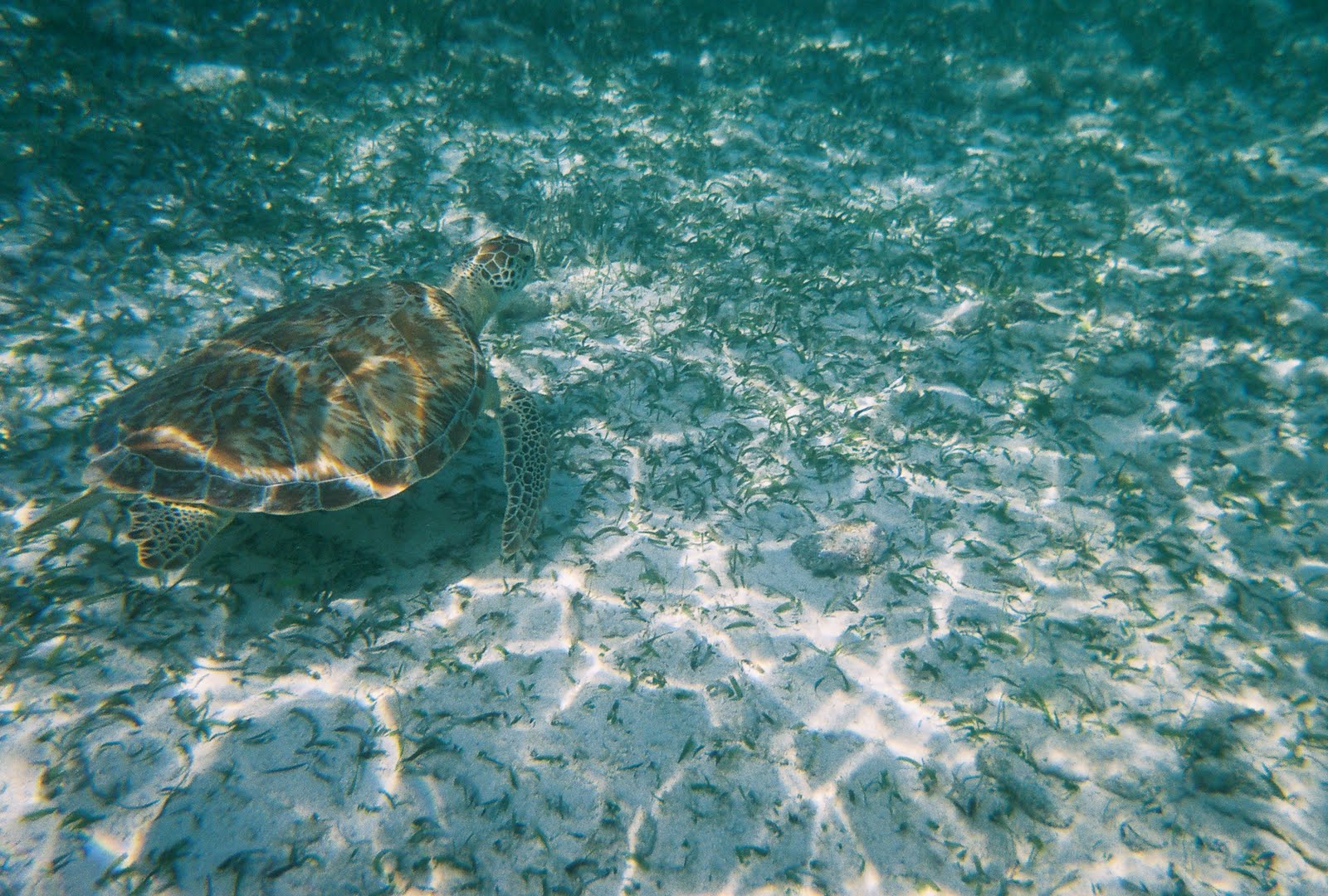
It was a giant gray-green sea turtle. I know water distorts, but it look at least three feet wide across its shell. Its head turned slowly on its thick neck, and with huge eyes, it regarded me flopping around in the water. Something like a patient smile turned its lips up slightly at the corner. Mesmerizingly slowly, its eyelids closed and then opened in a knowing blink. The very presence of this turtle instilled some sort of hope in me and I stopped gasping in air. The turtle stayed right next to me, its huge arms moving in slow motion back and forth in the water. It would turn its patient blink my way as if to say, “Try it this way.” I did. I regulated my breathing, put my head face down in the water, and slowly waved my arms back and forth at my side instead of the pell-mell, over head grasping at water that had worn me out. I turned to check my progress with the turtle that nodded ever so slightly and continued by my side. Instead of flapping my legs like a crazy woman, I used the flippers as they were designed to be used, in a slow, regular motion that propelled me through the water with much less effort.

We traveled on, side by side, turning our heads and nodding at each other. At one point I risked a smile and took in some ocean water. I decided I’d just smile with my eyes from that point on. I raised my head to see how far we’d come. The beach was in sight. It was reachable. I felt a rush of energy as I put my face back down in the water and discovered that in just a few moments my feet would reach bottom. My heart pounded, but this time in joy and gratitude. I righted myself on my flippers and turned to thank the turtle. It raised its head from the water, gave one final blink, dove under the water and swam off to the left.

From that day forward, I have acknowledged turtle as another of my wonderful spirit guides.

*Reference: Bennett, Hal Zina Ph.D., Spirit Guides, Tenacity Press, CA, 1997, p. 65 Meeting Your Spirit Guide

Saturday, July 3, 2010

Bits and Pieces


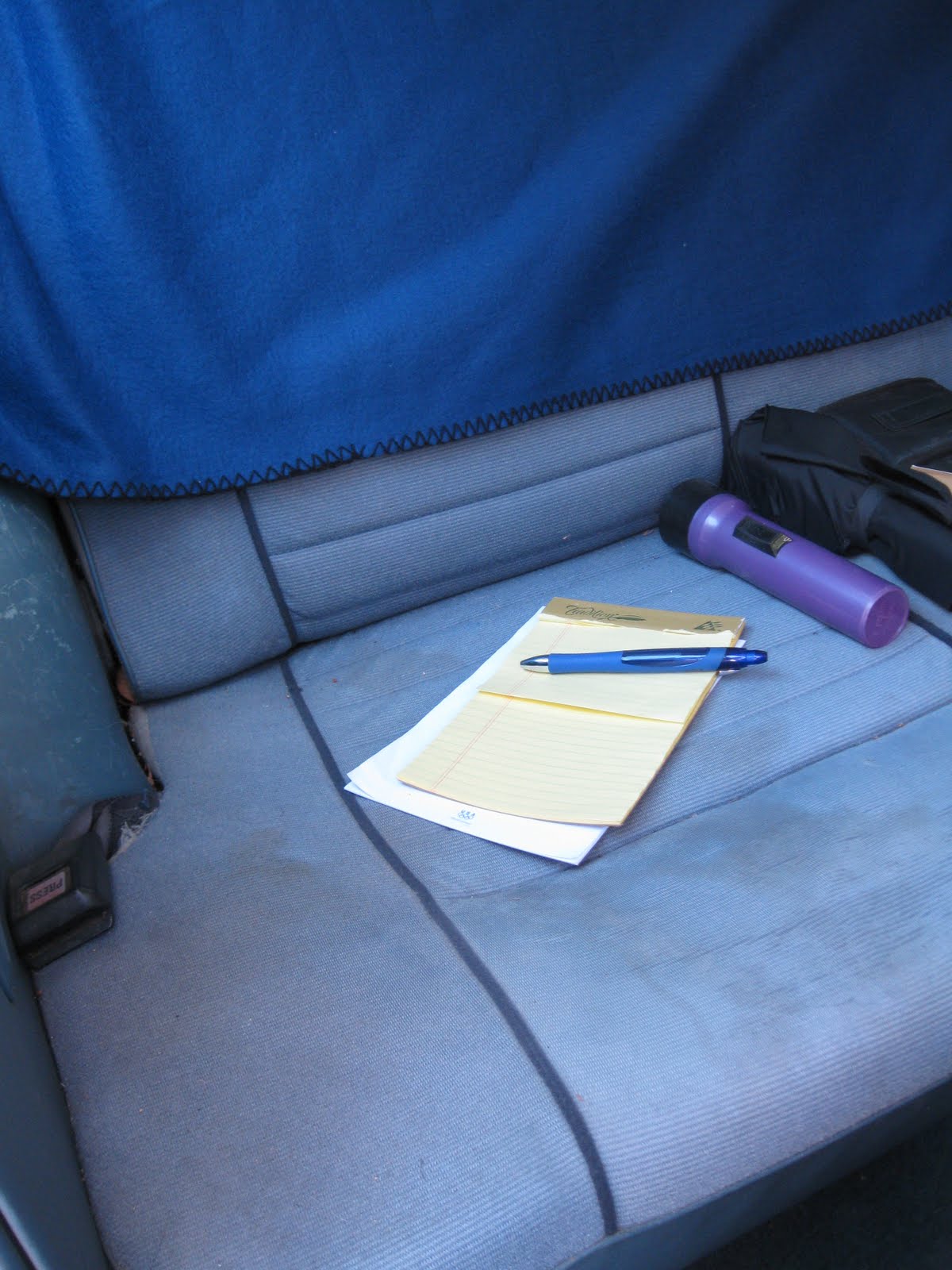
For years I’ve carried a pad of paper in the back seat of my car and a tiny notebook in my tote bag just in case I stumble upon a moment I want to remember. These moments are often so small and seemingly insignificant they risk getting lost in the clutter of my mind, yet they speak to a place inside of me that recognizes “special” even in its briefest form. I can only liken it to the sensation when a butterfly lands on my finger for a just a heartbeat, or a hummingbird stops inches from my face to stare me in the eyes and then is gone in a zip of wings.

Here are a few such moments:

Spider: The tires of my dusty orange VW Bug flatten dried oak leaves that carpet the parking lot. The leaves crackle and snap like blazing kindling. I park in the shade, turn off the engine, and roll the window down to capture a trickle of breeze. The scent in the air jogs a potpourri of olfactory memories from childhood, a mixture of the spray starch my mother used to use when ironing that made a scorched smell, and bubbling tar, and dust, and rhubarb snapped fresh from the garden.

Tumbling from an overhanging branch, a small brown spider drops with a soundless plop onto the hood of my car. Gathering herself together into a wobbly stance, she glares through the windshield at me with an “I meant to do that” stare, and staggers off on long spindly legs.


Ant: As I bend down to the water arcing from the fountain at the end of the trail, my eye fixes on a small cluster of twigs, the color of autumn wheat in Iowa, caught in the drain grid. There is a black spot on one twig that I imagine is a nothing more than a clump of dirt.

The cool water ripples over my dry lips and quenches my hiker’s thirst. Drawing back, I notice the speck of dirt move, showing itself to be an ant. I apologize to the ant for my mistake. It shrugs its minuscule black shoulder as if to suggest it is used to being mistaken for a bit of dirt, and slips quietly beneath the spongy end of a twig. I feel curiously saddened.


Flower Power: They sway in the breeze, three sisters sharing a communal terra cotta pot, Coral, Rose, and Angora Sweater Pink. Like wrong-colored daisies, they reach, bend toward the sun, and beckon a low-flying iridescent hummingbird, seducing her with their vibrancy.

Eyes closed, the neighbor’s tiger-striped cat bats gently with soft paws at dream birds in her sleep as she lies curled around the pot on the warm brick patio.

Saturday, June 26, 2010

Forgotten But Not Gone


Twelve years ago, I submitted an essay to a woman enthusiastically engaged in compiling an anthology of women’s invincible spirit as they move through the challenges and obstacles of life’s journey. It was a daunting task. Many agents and publishers were approached only to find the book “wasn’t a good fit” for their needs (a recurring theme for all writers at some point in their career).

Eventually, I let go of anticipation and figured it was another good idea that bit the dust. Years passed. This weekend I retrieved a package from my mailbox. The return address sounded oddly familiar, but I couldn’t place it immediately. I opened the package to find a paperback book, Potpourri For And About Women. Nice, I thought. I wonder who sent it to me.

Under the front cover was a lovely note from the author, thanking me for my contribution to her book. This was a copy in thanks and recognition. What contribution, I wondered. I read on. She pointed out the story name and page number of my submission. Oh my gosh; I’d forgotten all about that piece. I scanned the list of contributors, and there was my friend Marsh’s name too.

I e-mailed Marsh about my literary faux pas at having forgotten I’d even submitted a story. She wrote back, the chuckle obvious in her words. She, too, had forgotten she’d submitted a piece twelve years prior, as had her friend, Susan, whose piece was also in the anthology.

In the author’s preface, she states, “Sharing our secrets and personal life details with others is also one of the primary means by which we humans “connect” with one another.” With that in mind, I offer you my (rediscovered) piece, “She.”


She is an observer—that is the way she participates. She witnesses; she records. She walks along the beach close to the water’s edge.

A sea otter, bobbing in and out of foamy surf, tracks her. A gray pelican dips its wings as it skims the water. The waves lap at the edges of her shoes. Fat seagulls eye her in search of food. She carries only feathers and sand speckled stones gathered from the beach.

A couple meanders by holding hands, enveloped in that aura that separates them from others. She is not part of a couple. She is a woman alone. She tells others she’s become too set in her ways, values her solitude too much to relearn the art of partnering. She tells herself she is withered from aloneness and no longer believes she has what is needed to share. She is left with a quiet longing and the ability to observe.

She parks her chaise lawn chair on the very edge of the water. The surf at high tide comes rushing, swirling beneath her, surrounding her in gray foam and motion. She lets her fingers dangle in the Pacific. She is on an island, a tiny oasis of dull green and weathered white woven strands of porous nylon that holds her inches above being swept away by the pull of the receding water. She smiles as her mind drifts out to sea.

Sitting at the water’s edge, she shares the crusts of her sandwich and a few stray grapes with a seagull. Gulls, feathers puffed in anticipation, beaks agape in expectation, besiege her. She throws her whole sandwich onto the beach and covers her ears at the cacophony that follows.

A walnut colored sea otter floats by just off shore. With whiskers twitching, it arches its sleek back, dives serpent like into the waves, and disappears.

A gray pelican, head, neck, and body forming a flying “Z” skims the surface of the water. He retreats to the peak of a barnacle encrusted volcanic rock and preens himself in the sun.

She rises and plays a game of chase with her bare feet inching her toes ever closer to the receding foam and skip-jumping backward, just in time as the surf breaks and rushes forth to capture lost ground. She loses. Icy water swirls about her and she sinks ever so slightly, as the sand shifts beneath her weight.

She hadn’t noticed a family walking toward her inland along the beach. They’ve come for the day, or perhaps forever—it’s hard to tell. They are laden with beach paraphernalia. A small girl child trails slightly behind wearing a quality of God about her tiny frame. Shiny dark hair hangs straight to her thin shoulders; her skin is the same walnut color as the sea otter. Her sun-browned feet leave miniature prints in the sand. She appears like a tiny packhorse carrying a bulky burlap sack in each arm. A brightly colored serape is thrown over her shoulders, its tattered corner trails behind her in the sand.

The family passes, taking no notice of the woman at the water’s edge. Their voices speak a language unfamiliar to her ears. The girl child pauses to consider the woman. Her almond shaped brown eyes sparkle—or maybe it’s the sun glinting off the cornea of her eyes. A shy smile reveals three dark spaces where teeth were perhaps weeks ago. The woman feels vulnerable and exposed in the girl child’s steady gaze; a chill passes through her, and then her heart warms and softens. She looks away from the child and then back again. The girl says something in that foreign tongue that sounds like, “it’s okay, lady.” A tear slips form the woman’s eye. The girl child walks on.